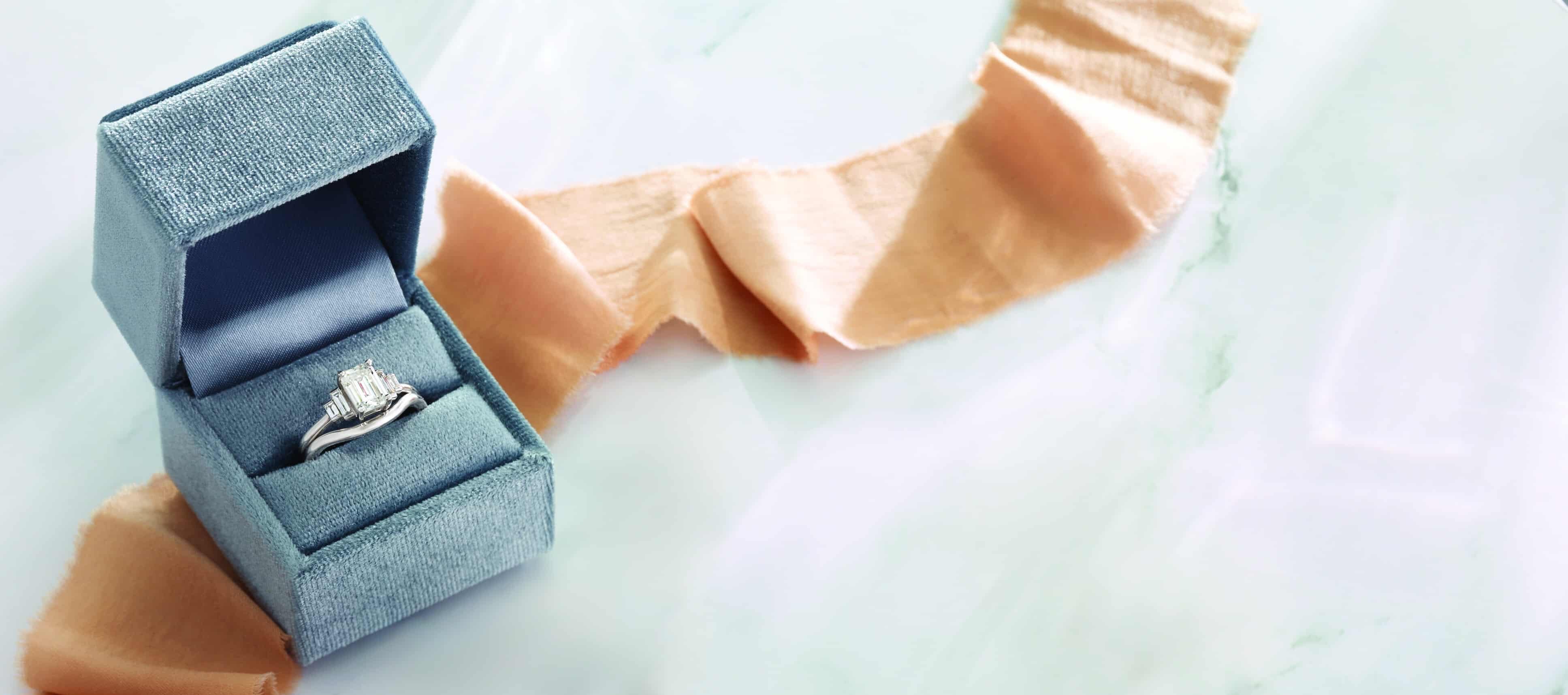
Natural Diamond Engagement Rings in Mandeville — What You Should Know Before You Buy

There is no shortage of places to buy a diamond engagement ring. You can buy one online, at the mall, at a chain store across the lake, or from a wholesaler who ships it in a box. So the real question is not where to find a ring — it is where to find the right one, and someone who will tell you the truth about what you are looking at.

That is a different conversation. And it is the one we have every day at Anne Dale Jewelers in Mandeville.

Why natural diamonds still matter

A natural diamond is not a marketing position. It is a geological event — carbon crystallized under extreme heat and pressure between one and three billion years ago, carried to the earth’s surface by volcanic activity, and eventually found, cut and placed into a piece of jewelry that will outlast everyone in this room.

That history is real. The rarity is real. And for couples on the Northshore where faith, family and generational tradition carry genuine weight — a natural diamond engagement ring is not just beautiful. It is meaningful in a way that a manufactured stone is not.

Natural diamonds also have an established resale and estate market that lab diamonds are still building. A well-chosen natural diamond purchased today is likely to hold or appreciate in value over time. It is a genuine heirloom.

What to look for — and what actually matters

The single most important factor in a natural diamond engagement ring is cut. Not carat weight. Not color. Cut.

A beautifully cut diamond — one with precise proportions and excellent symmetry — will outperform a larger, poorly cut stone every time. It will catch light from across a room. It will sparkle in candlelight and in fluorescent office lighting. It will be the ring that makes people stop and look.

We show couples this difference in person every week. A 0.85-carat diamond with an excellent cut next to a 1.2-carat diamond with a mediocre cut. The smaller stone wins almost every time.

After cut — color and clarity. We typically recommend G to I color and SI1 or better clarity for natural diamonds in the engagement ring range. This is the sweet spot where the stone looks exceptional to the naked eye without paying a premium for characteristics that require a loupe to detect.

The Anne Dale difference

Anne Dale holds a Graduate Gemologist degree from the GIA — the most respected credential in the diamond industry. When she looks at a diamond and tells you what she sees, that assessment carries forty years of trained expertise behind it. She is also an IRS Certified Federal Expert Witness in jewelry valuation. She has no interest in selling you something that does not serve you.

Michael Dale — Master Goldsmith — works on site in Mandeville. Custom settings, resized bands, prong repairs, heirloom redesigns — all done here, by hand, by someone who has spent his career at the bench.

When you sit down with us you are not talking to a commissioned salesperson running through a script. You are talking to the people who actually do the work.

Come see them in person

No photograph does a diamond justice. The way a well-cut stone moves in light — the way it scatters color across your hand — that is something you have to see to understand. We encourage every couple to try on multiple stones in different sizes, cuts and settings before making any decision.

There is no pressure here. No countdown timers. No manager offering a discount that expires tonight.

Just beautiful natural diamonds, genuine expertise and the kind of conversation you deserve before making one of the most meaningful purchases of your life.

Schedule a consultation →

Anne Dale Jewelers — 829 Asbury Drive, Mandeville, Louisiana — serving the Northshore since 1983.


ANNE DALE JEWELERS — MANDEVILLE, LOUISIANA

The 4Cs of Diamonds

A GIA GEMOLOGIST’S HONEST GUIDE FOR ENGAGEMENT RING BUYERS

GIA CERTIFIED GEMOLOGIST | MASTER GOLDSMITH ON-SITE | SERVING THE NORTHSHORE SINCE 1983

BEFORE YOU WALK INTO ANY JEWELRY STORE

Understanding the 4Cs is not about sounding knowledgeable. It is about knowing whether what you are being shown is worth what you are being asked to pay.

This guide was written by Anne Dale — GIA Certified Gemologist and Fellow of the Gemological Association of Great Britain — with over forty years of experience evaluating diamonds on the Northshore and beyond. It is not a sales pitch. It is what we tell every couple who sits across from us before we show them a single stone.

The 4Cs are a starting point — not a finish line.

Diamond Cut

THE FOUR CS

Cut · Color · Clarity · Carat

Cut

The most important C. Determines how light behaves inside the stone. A well-cut diamond sparkles — a poorly cut one looks dim regardless of its other grades.

Color

Measures yellow tint — not the flashes of color you see. D is colorless and the rarest. G–H is where most couples find the best value — faces up white at a fraction of D–F pricing.

Clarity

Grades the natural inclusions inside the stone. SI1 is the sweet spot — clean to the naked eye, only findable with a loupe. If you can’t see it, it isn’t there.

Carat

A unit of weight — not size. Price jumps at round numbers. A 0.95-carat stone is visually identical to a 1.00-carat but sits in a lower price tier. Stay just below the thresholds.

CUT — THE KING OF THE FOUR CS

The one C that is entirely the result of human skill.

Cut is not the shape of the diamond. Round, oval, cushion, emerald — those are shapes. Cut refers to how precisely the stone has been faceted — the angles, proportions and finish that determine how light behaves inside it.

A well-cut diamond takes light in through the top, bounces it between facets and returns it through the top as brilliance, fire and scintillation. A poorly cut diamond leaks light through the sides or bottom and looks dim regardless of its color or clarity grade.

Color and clarity are natural characteristics of the stone. Cut is a choice. A well-cut stone of modest color and clarity will outperform a poorly cut stone with superior grades in both. We never recommend compromising on cut regardless of budget.

The GIA grades cut on five levels: Excellent, Very Good, Good, Fair and Poor. For an engagement ring worn every day for a lifetime — Excellent or Very Good. Full stop.

COLOR — WHAT THE SCALE ACTUALLY MEANS

Yellow tint — and the lack of it.

The GIA color scale runs from D to Z. D is colorless. Z is a stone with visible yellow or brown tint. The scale measures the absence of color — the less color present, the rarer and more valuable the stone.

Near Colorless

D · E · F

COLORLESS

Rarest and most expensive. The difference between D and F is invisible to the naked eye.

Diamond Color M

G · H · I

OUR SWEET SPOT

Faces up white in almost any setting. Excellent value. Where most couples find the right balance.

Diamond Color P

J · K · L

FAINT COLOR

Visible warmth in white gold settings. Pairs beautifully with yellow gold which absorbs the warmth.

FANCY YELLOW DIAMOND

M · Z

VISIBLE COLOR

Significant yellow tint. Rarely appropriate for a center stone engagement ring at any price point.

CLARITY — WHAT YOU CAN AND CANNOT SEE

If you can’t see it with your naked eye — it isn’t there.

Every natural diamond forms under extreme heat and pressure over billions of years. Almost all of them contain internal characteristics called inclusions. The GIA clarity scale grades how visible these are under 10x magnification.

The practical question is not what grade the stone carries — it is whether the inclusions are visible to the naked eye. A stone graded SI1 with inclusions near the edge, partially hidden by a prong, may look cleaner than a VS2 stone with an inclusion positioned directly under the table.

A grading report tells you the grade. A gemologist tells you what the grade looks like in practice. That distinction is why you are here.

CARAT — WEIGHT NOT SIZE

One hundred points make a carat. Price jumps at round numbers.

Carat is a unit of weight, not a measurement of diameter. Two diamonds of identical carat weight can appear different sizes depending on how they are cut — a well-cut one-carat stone will appear larger than a deep-cut stone of the same weight because more of the mass is distributed across the face.

Diamonds are priced in weight categories and the price jumps at round numbers — 0.50, 0.75, 1.00, 1.50 carats. A 0.95-carat diamond is visually indistinguishable from a 1.00-carat diamond but is priced in a lower category.

Staying just below those thresholds is one of the most effective ways to maximize what you get for your money.

WHERE OUR DIAMONDS COME FROM

Anne travels to source diamonds personally.

We do not carry a case of inventory waiting to be sold. We bring in stones specifically for your appointment — personally evaluated by a GIA Certified Gemologist before they ever reach Mandeville.

COME LOOK THROUGH THE LOUPE

See what the grades look like in person.

At Anne Dale Jewelers we source diamonds specifically for each couple. We walk you through every stone, show you what we see through the loupe, and help you find the one that is right for her — not the one with the best grade on paper.

No pressure. No commission. Just the stone, the loupe and an honest conversation.

829 ASBURY DRIVE | MANDEVILLE, LOUISIANA 70471 | (985) 626-4266

The Engagement Ring Experience →