What Every Northshore Bride Deserves to Know

Before you say “I do,” let’s have a real talk about diamonds.

By Anne Dale, GIA Certified Gemologist — Mandeville, Louisiana  ·  Engagement Ring Guide & Diamond Education

You grew up on the Northshore. Maybe you went to St. Scholastica, Hannan, Mandeville, Fontainebleau, Lakeshore, NorthLake Christian, Saint Pauls or Covington High School. Maybe your parents got engaged across the lake, and your mom still gets misty when she talks about the moment your dad slipped that ring on her finger. Engagement rings around here carry weight — the kind you feel deep in your chest, not just on your hand. And yet, here you are in 2026, scrolling through Instagram at midnight looking at rings that seem impossibly beautiful and impossibly affordable at the same time. Welcome to the natural diamond vs. lab-created diamond conversation. Pull up a chair — we’re going to make this easy, honest, and maybe even a little fun.

“The most important thing about an engagement ring isn’t where the diamond came from. It’s that it tells your story, reflects your values, and — practically speaking — actually stays put on your finger.”

— Anne Dale Jewelers, Mandeville, Louisiana

A Ring Rooted in Faith & Tradition

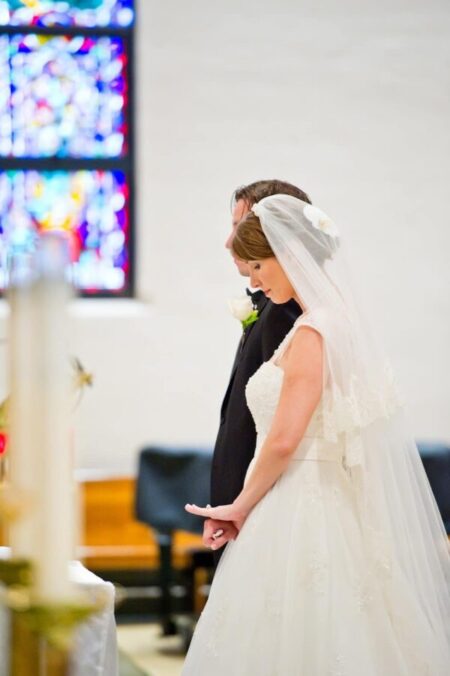
In Mandeville and across all of New Orleans, the marriage rite carries deep meaning. For the many Catholic and Christian families in our community, the exchange of rings during the Nuptial Mass or wedding ceremony is far more than a romantic gesture — it is a sacred covenant. The circular shape of the wedding band has symbolized eternity since ancient times — a perfect, unbroken circle representing a love with no beginning and no end, a reflection of God’s own eternal love.

The diamond at the center of the engagement ring carries its own profound symbolism. It is the hardest natural substance on earth — nearly indestructible — just as a holy marriage is meant to be. Its brilliance, the way it catches light and scatters it into a thousand directions, has long been seen as a symbol of the way love illuminates every corner of a life shared together. When a groom presents that ring and a bride accepts, it is, in many ways, the first tangible act of the sacrament to come.

Here’s the good news: both natural and lab-created diamonds carry all of this symbolism. The question is simply which one is right for you, your budget, and your priorities.

So What Exactly IS a Lab-Created Diamond?

Let’s clear something up right away, because there is a lot of confusion out there: a lab-created diamond is a real diamond. It is not cubic zirconia. It is not moissanite. It is not “fake.” A lab-grown diamond has the exact same chemical composition (pure carbon), the same crystal structure, the same refractive index, and the same physical hardness as a diamond formed deep within the earth over billions of years. Even the most sophisticated gemological equipment has to work hard to tell them apart.

The difference is origin. A natural diamond was born under extraordinary heat and pressure miles beneath the earth’s surface, carried up by volcanic activity, and mined over the course of decades. A lab-created diamond is grown in a controlled environment — over weeks rather than eons — using either High Pressure High Temperature (HPHT) or Chemical Vapor Deposition (CVD). Both produce a genuine diamond. The earth just didn’t make this one.

The practical result? Lab-created diamonds typically cost 50 to 80 percent less than their natural counterparts for the same carat weight and quality grades. That is the difference between a 0.75-carat natural diamond and a 1.5-carat lab diamond for the exact same budget. And yes — that matters enormously to couples who are also thinking about a down payment, student loans, and the very real cost of a wedding in Louisiana.

Natural vs. Lab Diamond — Side by Side

CategoryNatural DiamondLab-Created DiamondEdge
Chemical CompositionPure carbon — identical to labPure carbon — identical to naturalTie
Brilliance & SparkleExceptionalIdentical to naturalTie
Hardness (Mohs Scale)10/10 — hardest on earth10/10 — same hardnessTie
Price for Same QualityHigher — reflects rarity & origin50–80% less for same weight/gradeLab
Size for the BudgetSmaller stone for same spendNoticeably larger for same spendLab
Long-Term ValueHistorically holds & appreciatesResale market still emergingNatural
Rarity & UniquenessOne-of-a-kind gift of the earthReproducible; not inherently rareNatural
Romantic SymbolismBillions of years in the makingModern; a love that couldn’t waitNatural
Ethical & EnvironmentalConflict-free sourcing availableLess mining; energy use variesNuanced
Grading & CertificationGIA, AGS, IGI certifiedGIA & IGI certified (request lab cert)Tie

The Case for the Natural Diamond — Because She’ll Keep That Ring Forever

Here’s our honest take from years of fitting engagement rings on Northshore fingers: a natural diamond carries something a lab stone simply cannot replicate — story. When you hold a natural diamond, you are holding something formed between 1 and 3.3 billion years ago, under unimaginable conditions, long before humans ever walked this earth. That stone was here before the dinosaurs. It traveled to the surface in a volcanic eruption. It was found, cut, polished, and placed into a ring that will sit on your wife’s finger every single day of her life. No amount of clever marketing can replicate that narrative.

There is also the matter of long-term value. Natural diamonds — particularly well-cut stones in the 0.75 to 2-carat range — have historically held their value and in many cases appreciated meaningfully over time. The resale and estate market for natural diamonds is robust and well-established. Lab diamonds are still finding their footing, and as production technology improves and costs continue to fall, lab diamond resale values have trended downward.

For the bride who hopes to someday pass her ring to a daughter or granddaughter — a natural diamond engagement ring is a true heirloom. A piece of the earth, and a piece of her family’s story. There is real magic in that.

💎 Our Honest Recommendation on Natural Diamonds

If your budget allows for a beautiful natural diamond in the 0.75 to 1.25 carat range — with excellent cut, good color (G–I), and SI1 or better clarity — we would encourage you to have that conversation first. A well-cut natural diamond of this size is brilliant, wearable, stunning in any setting, and will likely be worth more in twenty years than it is today.

The key word is cut. A beautifully cut 0.85-carat natural diamond will outshine a poorly cut 1.2-carat stone every single time. Never sacrifice cut quality for carat weight. Come see us — we’ll show you the difference in person.

The Case for Lab — Because Sometimes Love Just Can’t Wait

We’re going to be real with you: for a lot of couples in their 20s and early 30s right now, budget is the conversation. Rent is high. Student loans are real. And the idea of spending four to six months’ salary on an engagement ring — that old rule invented by a diamond company in the 1940s, by the way — just doesn’t fit the world these couples are living in.

Enter the lab-created diamond. If a natural 0.75-carat diamond is at the top of your budget, a lab-created diamond at the same price point might put a breathtaking 1.5- to 2-carat stone on her finger. And we’ll tell you plainly: most people cannot tell the difference. Her coworkers won’t know. Her friends won’t know. Her mom won’t know — unless you tell her. She will have a stunning, sparkling, certified diamond on her left hand, and she will feel exactly as beautiful and as loved as she deserves to feel.

Beyond budget, some couples choose lab diamonds for intentional, values-based reasons — a lower environmental footprint, or an appreciation for modern science and human ingenuity. These are entirely valid reasons. A lab diamond chosen with intention and love is every bit as meaningful as the ceremony in which it will be given.

💍

⚠️ The Lean Factor: Why Bigger Isn’t Always Better

Here’s something most jewelry stores won’t tell you until you’re already frustrated at home three weeks after your engagement — and it applies to both natural and lab diamonds, but shows up far more often with lab stones because of how large they can get on a modest budget.

As a diamond increases in carat weight, it increases in both diameter AND depth. That depth has to go somewhere, and it goes down — meaning the stone sits progressively higher above the finger. A 3- or 4-carat diamond in a standard solitaire setting can sit so high on the hand that the ring becomes top-heavy. It flips. Constantly. You straighten it; it flips. You forget about it; it flips again. You look down in the middle of an important meeting and your beautiful diamond is facing your palm. It is genuinely, surprisingly annoying — and very difficult to engineer around in most standard settings.

There’s also the believability factor, and we say this with nothing but love: a 25-year-old wearing a flawless 4-carat diamond raises eyebrows — and not always the right kind. The ring should feel like an extension of who you are, not a costume piece.

Our sweet spot for lab-created diamonds: 1.0 to 2.5 carats. In this range you get genuinely impressive size, a stone that photographs beautifully, earns all the right compliments, and — crucially — stays right where it belongs on your finger. It’s the range where beauty, wearability, and believability all live together happily.

📐 Lab Diamond Size Guide for Everyday Wearability

1.0 – 1.5 carats: The Goldilocks zone. Stunning presence, comfortable fit, sits beautifully on the finger. Universally flattering on every hand size.

1.5 – 2.0 carats: Showstopping sparkle, still very wearable. A well-chosen setting keeps this size stable and secure.

2.0 – 2.5 carats: Genuinely impressive — the upper end of our recommended range. Setting selection becomes very important here. Come talk to us first.

2.5 – 3.5 carats: Proceed with intention. Beautiful in photos, but lean and flip issues become real. Not for everyone.

3.5+ carats (lab): Unless you have specific reasons and have tried it on extensively — we gently steer most brides away. The lean factor is very hard to live with daily.

Don’t Forget the Wedding Band — It Has to Work Together

Whether you go natural or lab, your engagement ring will one day be joined by a wedding band — and in the Catholic and Christian tradition of the Northshore, the placing of that wedding band during the ceremony is one of the most powerful moments in the entire rite. “With this ring, I thee wed.” Simple. Eternal. The most loaded seven words in the English language.

Here’s something couples often don’t think about until it’s too late: your engagement ring and wedding band need to be designed to work together. A very high-set solitaire may require a curved or contoured wedding band to sit flush beside it. A wider ring may need a thinner band to avoid an uncomfortable stack. And if your engagement ring leans — a wedding band will make that lean worse, not better.

At Anne Dale Jewelers, we encourage every couple to think about the engagement ring and wedding band as a set — a matched pair, like the two people wearing them. When they work together beautifully, the result is something you’ll look at every day for the rest of your life and smile.

So Which Diamond Is Right for You?

Choose a natural diamond if — the idea of a stone formed by the earth over billions of years moves you deeply; if heirloom value and long-term investment matter to your family; if you want something truly and irreproducibly unique; or if your budget comfortably supports a natural stone in the 0.75–1.25 carat range with excellent cut quality.

Choose a lab-created diamond if — you want the most diamond for your budget, full stop; if you’re drawn to modern innovation; if environmental considerations guide your choices; or if a natural diamond under one carat simply doesn’t excite you and you’d rather have a breathtaking 1.5-carat lab stone that she’ll adore every single day. (And honestly? She will. We’ve seen it hundreds of times.)

Either way — stay under 2.5 carats if you’re going lab. Trust us on this one. Your future self, the one straightening her ring for the four hundredth time in a staff meeting, will thank you.

“The right diamond isn’t the biggest one, or the most expensive one, or the one your Instagram algorithm keeps showing you. It’s the one that feels like the two of you — and the one that stays right-side up while you’re living your beautiful life.”

— Anne Dale Jewelers, Mandeville, Louisiana

Ready to Find the One?
Come See Us in Mandeville.

At Anne Dale Jewelers on the Northshore, we believe an educated bride makes the most joyful bride. Come in, try on diamonds — natural and lab — in every size and shape, and let us help you find the ring that tells your story. No pressure. Just beautiful diamonds, genuine expertise, and the kind of Northshore service that big mall stores simply can’t offer.

Visit Us in Mandeville
Browse Our Diamond Collection

📍 Mandeville, Louisiana  ·  Northshore’s Diamond Destination

Natural Diamonds
Lab Created Diamonds
Engagement Rings Mandeville LA
Diamond Education
Northshore Jewelry
Wedding Rings
Diamond Size Guide
Catholic Wedding Traditions
Anne Dale Jewelers

The three months’ salary rule is a marketing invention. You should know that before anyone tries to use it on you.

In the 1930s, De Beers — the diamond mining company — created an advertising campaign to boost diamond sales during the Great Depression. The original suggestion was one month’s salary. By the 1980s their marketing had quietly inflated it to three. There is no gemological basis for this number. There is no financial logic behind it. It was invented by the people who profit when you spend more.

We are telling you this because we would rather you spend the right amount than the most amount.

What the right amount actually is

The right amount to spend on an engagement ring is the amount that lets you buy a stone you are genuinely proud of without creating financial pressure at the beginning of a marriage.

That number is different for every couple. We have helped couples find extraordinary rings at every price point. What determines whether the ring is right is not the budget — it is the knowledge applied to that budget.

A GIA Certified Gemologist working within a $3,000 budget will find you a better ring than an uninformed shopper spending $6,000 at a chain store. The difference is knowing which compromises cost you nothing visible and which ones you will notice every day.

Where the money actually goes

Understanding what drives diamond pricing helps you spend intelligently.

Cut is where we never recommend compromising. A well-cut stone returns light beautifully regardless of its color or clarity grade. A poorly cut stone looks dim at any price. The difference between an Excellent cut and a Good cut is visible to the naked eye and worth every dollar.

Color and clarity are where intelligent compromises live. A G or H color diamond faces up white in almost any setting. A VS2 or SI1 clarity stone with well-positioned inclusions is visually clean without the premium of a flawless grade. Moving from D color to G, or from VVS1 to VS2, can free up significant budget to put toward cut or carat weight where you will actually see the difference.

Carat weight has pricing thresholds at round numbers — 0.50, 0.75, 1.00, 1.50. A 0.95-carat diamond is visually identical to a 1.00-carat stone but sits in a lower pricing tier. Staying just below those thresholds is one of the most practical ways to maximize what you get.

What your fiancée actually wants

Most people who come in convinced they know exactly what she wants discover something more nuanced when they sit down with us. The shape she mentioned once may not be the shape that suits her hand. The setting she pointed to online may not be available in the metal she prefers or may not hold a stone securely for daily wear.

This is why we ask you to tell us about her — how she dresses, what her lifestyle is, whether she works with her hands, what jewelry she already wears and loves. The ring that is right for her is specific. A conversation gets you there faster than a catalog.

What we don’t do

We don’t have a minimum spend. We don’t work on commission. We don’t show you stones outside your budget to make you feel like what you can afford isn’t enough.

You tell us your number at the beginning of the conversation and we work within it. That is the only way this works honestly.

The Northshore has a resource most people don’t use

A GIA Certified Gemologist and a Master Goldsmith in the same room, available by appointment, working with one couple at a time. That is not a common combination. It exists here, in Mandeville, without requiring a trip across the lake.

Whatever your budget — bring it to us. We will show you what it can do.

Schedule your diamond appointment →


Local Jewelers: Getting the Most Value out of Purchasing a Diamond Engagement Ring

You have made the decision to ask for your girlfriend’s hand in marriage. Purchasing an Engagement Ring should be a joyful labor of love.

When you start gathering suggestions for the right jeweler, someone will probably bring up a national chain. After all, they have cornered the market with large-scale advertising campaigns and thus achieved global fame.

Before you get tempted to buy your engagement ring at these stores, please think about the shopping experience you will have, the ultimate quality of the jewelry displayed, and most importantly, the overall value you will receive.

In this article, one of the Northshore’s leading private jewelers will share the three most important factors that determine an engagement ring’s value and the reasons why local stores are more likely to consider them.

Price

When purchasing an engagement ring jewelry experts will attest to the fact that national chains mark up the prices on their inventory, but the quality won’t match the cost they demand.

You will find the most competitive prices at a local jeweler, because we take the time to develop a relationship with you. This means that we’ll learn about your budget and work around it until we find the most appropriate engagement ring for you. Plus, you’ll know that every piece of jewelry has been personally made for our customers.

Your engagement ring will possess its own unique story, just like the journey of your love.

Quality

Most of the merchandise sold by national jewelry chains – if not the entire stock – has been purchased in large quantities. You cannot guarantee that these exporters check the four C’s on each diamond, and you run the risk of ending up with a mediocre piece of jewelry.

Local jewelry stores are typically owned by GIA-certified professionals who understand what makes a good diamond. They believe that quality ranks above all other elements when choosing the right stones for their pieces. At our store, a gemologist will provide a curated selection of diamonds and take you through the grades on each one, so you can be sure that you’ll get a beautifully designed engagement ring.

Design

Because national jewelry chains buy their inventory from diamond manufacturers, the engagement ring designs are not truly original. Instead, they are mass-produced without giving any thought to the customers’ unique preferences. When thousands of people are wearing that same engagement ring, you don’t feel very special. You want something that has been created for you, rather than the hottest engagement ring on the market. If this sounds true, a local jeweler can design a customized ring for the proposal.

We are proud of the personal touch that goes into every piece we put in our showcases, because we value your experience.

Come Visit Us

At Anne Dale Jewelers, we want to help you find the engagement ring of your dreams.

We have been serving the Mandeville community for the past 40 years, and we treat our customers like our family. Our newly expanded engagement ring gallery features a wide variety of diamonds, and if you don’t see something you like, we can create the perfect ring for you.

Meet with a GIA-certified gemologist and master craftsman at our store. We will happily answer any questions, whether you haven’t started your search or you know exactly what you want.

Visit us at 829 Asbury Drive, or set up an appointment by calling (985) 626-4266 today.

At Anne Dale Jewelers, we want to help you find the engagement ring of your dreams. Choose something from our newly expanded gallery, or let us build a custom piece of jewelry for you. We have been serving the Northshore for 40 years, and we are very passionate about diamonds.

Set up an appointment with a GIA-certified gemologist today. Either visit our store at 829 Asbury Drive or give us a call at (985) 626-4266. Your experience matters to us!


ANNE DALE JEWELERS — MANDEVILLE, LOUISIANA

The 4Cs of Diamonds

A GIA GEMOLOGIST’S HONEST GUIDE FOR ENGAGEMENT RING BUYERS

GIA CERTIFIED GEMOLOGIST | MASTER GOLDSMITH ON-SITE | SERVING THE NORTHSHORE SINCE 1983

BEFORE YOU WALK INTO ANY JEWELRY STORE

Understanding the 4Cs is not about sounding knowledgeable. It is about knowing whether what you are being shown is worth what you are being asked to pay.

This guide was written by Anne Dale — GIA Certified Gemologist and Fellow of the Gemological Association of Great Britain — with over forty years of experience evaluating diamonds on the Northshore and beyond. It is not a sales pitch. It is what we tell every couple who sits across from us before we show them a single stone.

The 4Cs are a starting point — not a finish line.

Diamond Cut

THE FOUR CS

Cut · Color · Clarity · Carat

Cut

The most important C. Determines how light behaves inside the stone. A well-cut diamond sparkles — a poorly cut one looks dim regardless of its other grades.

Color

Measures yellow tint — not the flashes of color you see. D is colorless and the rarest. G–H is where most couples find the best value — faces up white at a fraction of D–F pricing.

Clarity

Grades the natural inclusions inside the stone. SI1 is the sweet spot — clean to the naked eye, only findable with a loupe. If you can’t see it, it isn’t there.

Carat

A unit of weight — not size. Price jumps at round numbers. A 0.95-carat stone is visually identical to a 1.00-carat but sits in a lower price tier. Stay just below the thresholds.

CUT — THE KING OF THE FOUR CS

The one C that is entirely the result of human skill.

Cut is not the shape of the diamond. Round, oval, cushion, emerald — those are shapes. Cut refers to how precisely the stone has been faceted — the angles, proportions and finish that determine how light behaves inside it.

A well-cut diamond takes light in through the top, bounces it between facets and returns it through the top as brilliance, fire and scintillation. A poorly cut diamond leaks light through the sides or bottom and looks dim regardless of its color or clarity grade.

Color and clarity are natural characteristics of the stone. Cut is a choice. A well-cut stone of modest color and clarity will outperform a poorly cut stone with superior grades in both. We never recommend compromising on cut regardless of budget.

The GIA grades cut on five levels: Excellent, Very Good, Good, Fair and Poor. For an engagement ring worn every day for a lifetime — Excellent or Very Good. Full stop.

COLOR — WHAT THE SCALE ACTUALLY MEANS

Yellow tint — and the lack of it.

The GIA color scale runs from D to Z. D is colorless. Z is a stone with visible yellow or brown tint. The scale measures the absence of color — the less color present, the rarer and more valuable the stone.

Near Colorless

D · E · F

COLORLESS

Rarest and most expensive. The difference between D and F is invisible to the naked eye.

Diamond Color M

G · H · I

OUR SWEET SPOT

Faces up white in almost any setting. Excellent value. Where most couples find the right balance.

Diamond Color P

J · K · L

FAINT COLOR

Visible warmth in white gold settings. Pairs beautifully with yellow gold which absorbs the warmth.

FANCY YELLOW DIAMOND

M · Z

VISIBLE COLOR

Significant yellow tint. Rarely appropriate for a center stone engagement ring at any price point.

CLARITY — WHAT YOU CAN AND CANNOT SEE

If you can’t see it with your naked eye — it isn’t there.

Every natural diamond forms under extreme heat and pressure over billions of years. Almost all of them contain internal characteristics called inclusions. The GIA clarity scale grades how visible these are under 10x magnification.

The practical question is not what grade the stone carries — it is whether the inclusions are visible to the naked eye. A stone graded SI1 with inclusions near the edge, partially hidden by a prong, may look cleaner than a VS2 stone with an inclusion positioned directly under the table.

A grading report tells you the grade. A gemologist tells you what the grade looks like in practice. That distinction is why you are here.

CARAT — WEIGHT NOT SIZE

One hundred points make a carat. Price jumps at round numbers.

Carat is a unit of weight, not a measurement of diameter. Two diamonds of identical carat weight can appear different sizes depending on how they are cut — a well-cut one-carat stone will appear larger than a deep-cut stone of the same weight because more of the mass is distributed across the face.

Diamonds are priced in weight categories and the price jumps at round numbers — 0.50, 0.75, 1.00, 1.50 carats. A 0.95-carat diamond is visually indistinguishable from a 1.00-carat diamond but is priced in a lower category.

Staying just below those thresholds is one of the most effective ways to maximize what you get for your money.

WHERE OUR DIAMONDS COME FROM

Anne travels to source diamonds personally.

We do not carry a case of inventory waiting to be sold. We bring in stones specifically for your appointment — personally evaluated by a GIA Certified Gemologist before they ever reach Mandeville.

COME LOOK THROUGH THE LOUPE

See what the grades look like in person.

At Anne Dale Jewelers we source diamonds specifically for each couple. We walk you through every stone, show you what we see through the loupe, and help you find the one that is right for her — not the one with the best grade on paper.

No pressure. No commission. Just the stone, the loupe and an honest conversation.

829 ASBURY DRIVE | MANDEVILLE, LOUISIANA 70471 | (985) 626-4266

The Engagement Ring Experience →


Most men walk into a jewelry store underprepared. They have a vague budget, a general idea of what she might like, and a hope that someone knowledgeable will guide them through the rest. Sometimes that works out. Sometimes it doesn’t.

The difference usually comes down to the questions asked — and whether the person across the counter has the expertise to answer them honestly.

Here is what to ask before you buy, and what the answers should sound like from a jeweler worth trusting.

Before you walk in

How much should I actually spend?

Settle on a number before any conversation with a jeweler begins. Not a range — a number. A range invites pressure toward the top of it. A firm budget communicated at the start of a conversation shapes everything that follows and tells you immediately whether the jeweler respects it or works around it.

At Anne Dale we ask for your budget in the first five minutes. Everything we show you after that fits within it.

What does she actually like?

This requires more observation than most people realize. Look at the jewelry she already wears — yellow gold or white, simple or detailed, delicate or substantial. Notice whether she tends toward classic or contemporary. Look at her hands — certain shapes and settings suit certain hand proportions better than others.

Bring those observations to your appointment. A good gemologist will take what you’ve noticed and translate it into specific recommendations. You don’t need to arrive with answers — you need to arrive with details.

When you’re looking at stones

What are the 4Cs of this diamond — and which one matters most here?

Any jeweler should walk you through cut, color, clarity and carat weight for every stone they show you. If they can’t or won’t, that tells you something important.

Cut matters most. It is the one C that determines how the stone performs in light — whether it returns brilliance and fire or sits dim on her finger. We never recommend compromising on cut regardless of budget.

Color and clarity are where intelligent tradeoffs live. Ask the jeweler to explain specifically why they are showing you this stone at this grade, not just what the grade is.

Can I see the grading report?

Every diamond we source comes with a GIA grading report. Ask to see it and ask the jeweler to walk you through it — not just the grades but what they mean for this specific stone. The report tells you the grade. The gemologist tells you what the grade looks like in practice.

One thing the report does not tell you is where the inclusions are positioned relative to the setting. A stone graded SI1 with inclusions hidden under a prong looks cleaner than a VS2 stone with an inclusion centered under the table. Ask your jeweler to show you through the loupe.

What are my payment options?

Ask this plainly and early. There is no embarrassment in it. A jeweler who works with couples every day has heard every version of this question and should answer it directly — deposit required, payment plan available, timeline for completion.

After you’ve chosen

How do I maintain this ring?

A diamond engagement ring worn every day needs periodic attention — cleaning, prong inspection, checking for stone movement. Ask your jeweler how often they recommend bringing it in and what that service involves.

At Anne Dale we check prongs and clean rings for our customers at no charge. Simple maintenance catches small problems before they become lost stones.

Will you repair this ring if something happens?

This is one of the most important questions most people forget to ask. The answer reveals how the store operates. At Anne Dale every repair is performed on-site by our Master Goldsmith. Your ring never leaves the building. That is not the standard at most jewelry stores — at most, your ring goes into a shipping envelope bound for a facility you will never see.

Ask specifically: is repair done in-house or sent out? The answer matters more than any warranty language.

Can the ring be modified later?

Tastes change. Fingers change. Significant anniversaries sometimes call for something added. Ask your jeweler whether the setting you are choosing allows for future modification — adding stones, resizing, engraving — and what those modifications would involve.

A well-designed custom ring anticipates this. A mass-produced branded ring often doesn’t.

One last thing

The jeweler you choose for this purchase is the jeweler you will return to for every repair, every anniversary, every piece of jewelry that matters for the rest of your life together. That relationship is worth more than any single transaction.

Anne Dale Jewelers has been that jeweler for Northshore couples since 1983. One couple at a time. No commission. No pressure. Just the ring she deserves and the knowledge to find it.

Schedule your appointment →


ANNE DALE JEWELERS — MANDEVILLE, LOUISIANA

Local Jewelers vs Chain Jewelry Stores

WHAT YOU ACTUALLY GET FOR YOUR MONEY

GIA CERTIFIED GEMOLOGIST | MASTER GOLDSMITH ON-SITE | SERVING THE NORTHSHORE SINCE 1983

THE HONEST COMPARISON

Walk into a chain jewelry store at any mall in America and the experience is largely the same.

Bright lighting. Glass cases full of branded inventory. A sales associate on commission who learned about diamonds in a two-week training program. A repair ticket that means your ring gets shipped to a facility in another state and returned two weeks later — if it comes back at all.

Walk into Anne Dale Jewelers in Mandeville and none of that is true.

That difference is not incidental. It is the entire point.

WHAT CHAIN STORES ARE ACTUALLY SELLING

The model that works for volume — and not for you.

Large jewelry chains operate on a retail model built around inventory turnover. Their diamonds are selected by corporate buyers, acquired through buying groups, and distributed identically across hundreds of locations. The ring in the case in Mandeville is the same ring in the case in Dallas, Denver and Detroit.

When you buy from a chain, a significant portion of what you pay covers real estate in high-traffic locations, national television advertising, franchise fees and the cost of maintaining that identical inventory across every store.

None of that has anything to do with the quality of what ends up on her finger.

WHAT A LOCAL JEWELER IS ACTUALLY SELLING

No franchise. No corporate buyer. No inventory to turn over.

WHAT CHAIN STORES HAVE

Corporate diamond buyers in another state
Identical inventory across hundreds of locations
Sales associates on commission
Repair shipped out of state in an envelope
High-traffic real estate costs built into prices
National advertising budgets in every price tag
Two-week diamond training programs
A quota to meet by end of day

WHAT ANNE DALE HAS

A GIA Certified Gemologist who selects every stone
Diamonds sourced specifically for your appointment
No commission — ever
Every repair performed on-site by a Master Goldsmith
No franchise fees in your price tag
Word of mouth as our only advertising for 40 years
Forty years of gemological education and practice
One couple. One conversation. All the time needed.

A private consultation at Anne Dale Jewelers · Mandeville, Louisiana · One couple at a time

THE REPAIR QUESTION NOBODY ASKS UNTIL IT IS TOO LATE

Most people don’t think about repair when buying a ring.

They think about it eighteen months later when a prong snaps or a stone works loose. At a chain store, your ring leaves. It goes into a shipping envelope, travels to a repair facility you have never seen, is handled by people you will never meet, and comes back when it comes back.

At Anne Dale, Michael is at the bench. Your ring does not leave the building. You can watch it being worked on if you want to. Simple repairs are often done while you wait.

That is not a marketing claim — it is a physical fact about how this shop is built and operated.

Michael Dale · Master Goldsmith · Every repair performed on-site in Mandeville

THE CUSTOM DIFFERENCE

Chain stores sell what they have. We start from scratch.

If you want something different at a chain store — a different setting, a different metal, a combination that doesn’t exist in their catalog — you’re told it can’t be done, or quoted a customization fee that approaches the cost of the ring itself.

At Anne Dale, custom is the default. Every engagement ring we make is designed around the couple sitting across from us. There is no catalog to deviate from because we don’t start with a catalog.

The Northshore doesn’t need to look elsewhere. Everything that exists on Canal Street exists here. Some of it exists here better.

COME SEE THE DIFFERENCE

One conversation will tell you everything.

Walk in during showroom hours or book an appointment. No commission. No pressure. Just honest expertise from people who have been doing this for forty years on the Northshore.

Serving Mandeville, Covington, Madisonville, Abita Springs and the greater Northshore since 1983.

829 ASBURY DRIVE | MANDEVILLE, LOUISIANA 70471 | (985) 626-4266

The Engagement Ring Experience →


ANNE DALE JEWELERS — MANDEVILLE, LOUISIANA

Why Northshore Couples Don’t Cross the Bridge Anymore

EVERYTHING YOU NEED IS ALREADY ON THIS SIDE

GIA CERTIFIED GEMOLOGIST | MASTER GOLDSMITH ON-SITE | SERVING THE NORTHSHORE SINCE 1983

THE ASSUMPTION THAT NO LONGER HOLDS

There was a time when crossing the Causeway felt necessary.

If you wanted a serious engagement ring — a real diamond, a real conversation, someone who actually knew what they were talking about — the assumption was that you needed to go to New Orleans. To the big stores on Canal Street. To the names your parents recognized.

That assumption is outdated. For couples on the Northshore, it has been for a while.

Anne Dale Jewelers has been in Mandeville since 1983 — before most of the current Northshore population arrived.

Anne Dale Jewelers · 829 Asbury Drive · Mandeville, Louisiana · Since 1983

ONE COUPLE AT A TIME

What the big stores cannot replicate.

01

You are the only couple in the room.

No one waiting behind you. No clock running. One jeweler, one gemologist, and the time to get it exactly right. That is not a marketing claim — it is how every appointment here is structured.

02

Real credentials in the room.

A GIA Certified Gemologist and a Master Goldsmith — not a sales associate trained in two weeks. Anne has personally evaluated every diamond she shows you. Michael has made jewelry by hand for over forty years.

03

Your ring never leaves Mandeville.

Every repair, every resize, every custom fabrication happens in our on-site shop. No shipping envelopes. No strangers. You know exactly where your jewelry is at every moment.

WHAT WE SPEND OUR MONEY ON

Not rent. Not advertising. Not franchise fees.

Large jewelry chains spend heavily on real estate in high-traffic locations, national television advertising, and the cost of maintaining identical inventory across hundreds of stores. Those costs are built into every price tag. You are paying for the location, the commercials, the franchise.

Anne Dale has no franchise. No corporate buyer. What we spend on instead is sourcing — personally selecting diamonds for each couple, traveling to see stones, bringing in gems specifically for your appointment.

The difference in what you receive for the same investment is significant.

A private consultation at Anne Dale Jewelers · Mandeville, Louisiana

THE NORTHSHORE HAS EVERYTHING IT NEEDS

The couples who come here already know.

The couples who come to Anne Dale drive from Covington, Madisonville, Abita Springs and across the Northshore. Some drive from Baton Rouge. Some come because this is where their family has always come. Very few of them cross the bridge to shop for jewelry anymore.

They already know what is on the other side. They have been here.

Everything that exists on Canal Street exists here. Some of it exists here better.

COME SEE FOR YOURSELF

No bridge required.

Book an appointment or walk in during showroom hours. One couple at a time. No pressure. No commission. Just the ring she deserves and the knowledge to find it.

Serving Mandeville, Covington, Madisonville, Abita Springs and the greater Northshore since 1983.

829 ASBURY DRIVE | MANDEVILLE, LOUISIANA 70471 | (985) 626-4266

The Engagement Ring Experience →


Most jewelry stores offer repair. Very few do it themselves.

The standard practice at chain stores and many independent jewelers is to collect your piece, fill out a ticket, and send it to a repair facility — often out of state — where it joins a queue of other people’s jewelry handled by technicians you will never meet. Your ring travels in an envelope. It comes back when it comes back. If something goes wrong in transit or during the repair, the conversation about accountability gets complicated quickly.

At Anne Dale Jewelers in Mandeville, repair does not work that way.


Michael Dale, Master Goldsmith — every repair performed on-site in Mandeville


What “On-Site” Actually Means

When we say every repair is performed on-site, we mean Michael Dale — our Master Goldsmith with over forty years at the bench — does the work himself, in our shop, on Asbury Drive.

Your jewelry does not leave the building. It does not leave Mandeville. It does not leave our hands.

That distinction matters more than most people realize — until something goes wrong somewhere else.


What We Repair

The most common repairs we handle:

Rings & Bands

  • Ring sizing up and down in all metals — yellow gold, white gold, rose gold, platinum and silver
  • Prong re-tipping and replacement — the most critical maintenance a diamond ring requires. Worn or broken prongs are the leading cause of lost stones
  • Stone tightening and replacement — including sourcing a matching stone when one has been lost
  • Rhodium plating on white gold

Chains, Bracelets & More

  • Chain repair and soldering — from delicate rope chains to heavy link styles
  • Clasp replacement on necklaces and bracelets
  • Bracelet repair
  • Earring post and back replacement
  • Pearl and bead restringing, knotted between each pearl
  • Watch battery replacement and band adjustment
  • General cleaning and inspection

Not sure whether your piece can be repaired? Bring it in. We will look at it honestly and tell you what we see. Sometimes the right answer is repair. Sometimes restoration. Sometimes a simple cleaning. We will tell you which.


The Laser Soldering Difference

Our shop is equipped with a laser soldering machine — a precision tool that allows repairs in areas where traditional torch soldering would risk damaging heat-sensitive stones or delicate settings.

Not every repair shop has one.

It is the difference between a repair that preserves the integrity of the original piece and one that compromises it.


Simple Repairs While You Wait

Many repairs — watch battery replacements, ring inspections, basic cleanings, minor adjustments — are completed while you wait. No appointment necessary. Walk in during showroom hours and we will take a look.

For more complex work we will give you:

  • A straight estimate before anything begins
  • A realistic timeline
  • A text notification when your piece is ready

No surprises. No shipping envelopes. No strangers handling what matters to you.


Jewelry Worn Every Day Deserves Annual Attention

Any piece worn daily — an engagement ring, a wedding band, a chain — should be inspected once or twice a year.

Prongs wear. Clasps loosen. Stones work themselves free gradually before they disappear suddenly. A quick inspection catches small problems before they become expensive ones — or irreplaceable losses.

Bring it in. We will check it at no charge.


Anne Dale Jewelers · 829 Asbury Drive · Mandeville, Louisiana · Serving the Northshore since 1983

Schedule a repair consultation →