By Anne Dale — GIA Certified Gemologist, Mandeville, Louisiana
Three billion years ago the Earth was still learning what it was.
No oceans yet. No continents. No living thing had drawn a breath or left a mark. Just a young planet cooling slowly from the violence of its own creation — rock and heat and pressure and darkness, all the way down.
And somewhere in that darkness, something extraordinary was happening quietly.
Carbon — the most ordinary element in the universe, the stuff of soot and smoke and dust — was being rearranged. Slowly. Impossibly. Under pressure so extreme it has no human equivalent, in heat that would reduce everything we know to vapor, it was becoming something else entirely.
A diamond.
Not for any reason anyone could have named. Just the Earth, doing what the Earth does — taking something common and, given enough time and enough pressure, turning it into something that lasts forever.
The journey to your hand
A natural diamond does not simply form and then sit there waiting to be found. The conditions that create diamonds exist so deep in the Earth’s mantle that no human technology has ever reached them — unless the Earth decides to deliver them itself.
And occasionally, rarely, it does.
A column of superheated magma tears upward through the crust at supersonic speed — a kimberlite eruption — violent enough to carry passengers from a hundred and fifty miles down, fast enough that the diamonds survive the journey without converting back to graphite. These eruptions happened between fifty and two hundred million years ago. They will not happen again in any timeframe that matters to human civilization.
The diamonds that reached the surface are the only ones we will ever have access to. There are no more coming. The Earth made a finite number of natural diamonds accessible to human hands and then stopped.
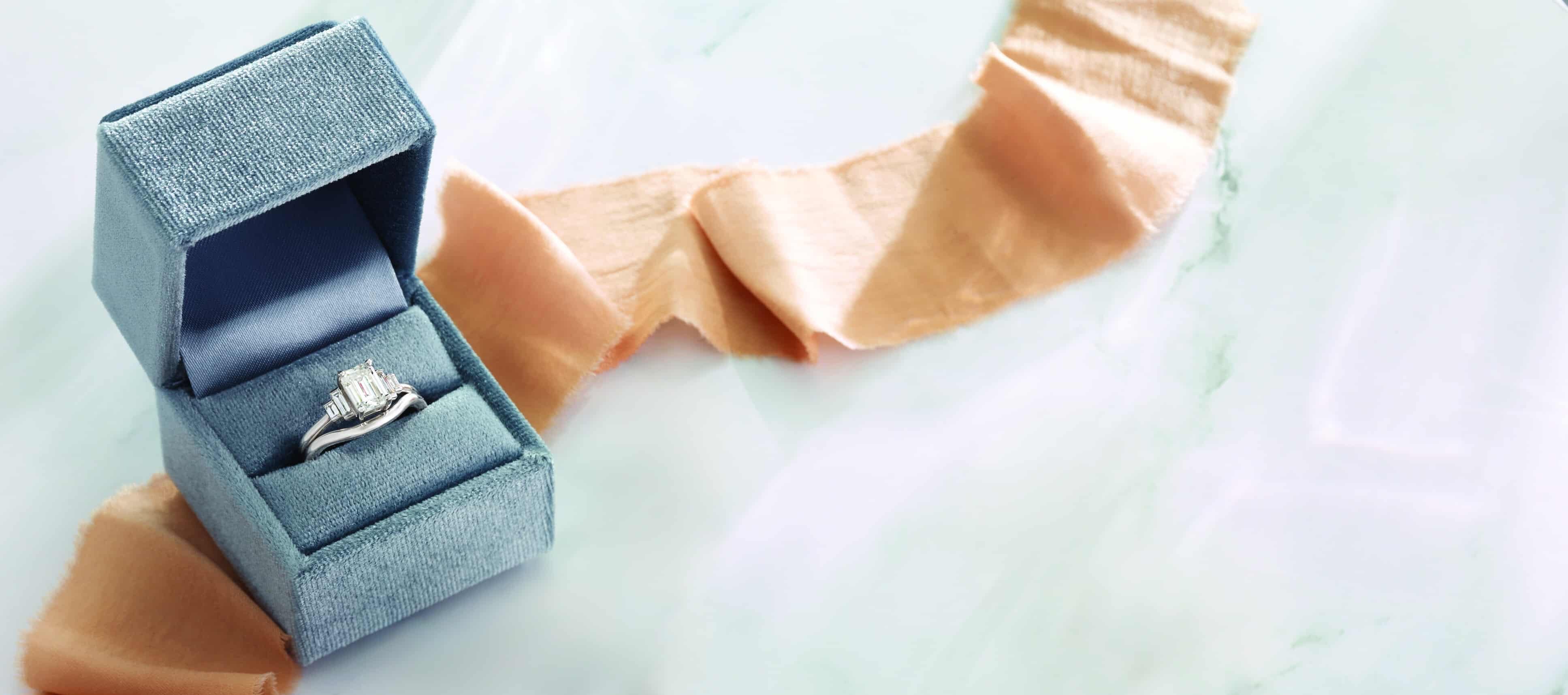
Yours is one of them.
Think about what had to happen for this stone to reach your hand. The right combination of carbon, heat and pressure sustained over billions of years. A volcanic eruption rare enough that geologists have catalogued only a few thousand kimberlite pipes on the entire planet. The survival of the stone through every geological event since. Its discovery, its journey to a cutter, its setting by a craftsman who understood its weight.
Remove any single link in that chain and the stone does not exist.
Rarity is not a marketing position. It is the literal truth of what a natural diamond is.
What forever felt like before anyone invented the word
There is something that happens when two people decide to spend their lives together — a shift in how time feels. The future suddenly has weight. The person across from you is no longer just someone you love today but someone you are choosing for every day that follows.
That feeling needed a symbol. Something that could hold the weight of it without breaking.
The diamond arrived at exactly the right moment in human history. Not because a campaign decided it should — though one certainly helped — but because it was already the right answer. The hardest natural substance on earth. Formed under the exact conditions that the best love stories are also formed under — time, pressure, darkness, and an almost incomprehensible resilience.
The circle of the band. The stone at its center. Together they say something that language keeps almost reaching and never quite landing.
This does not end.
Something we have never said publicly until now
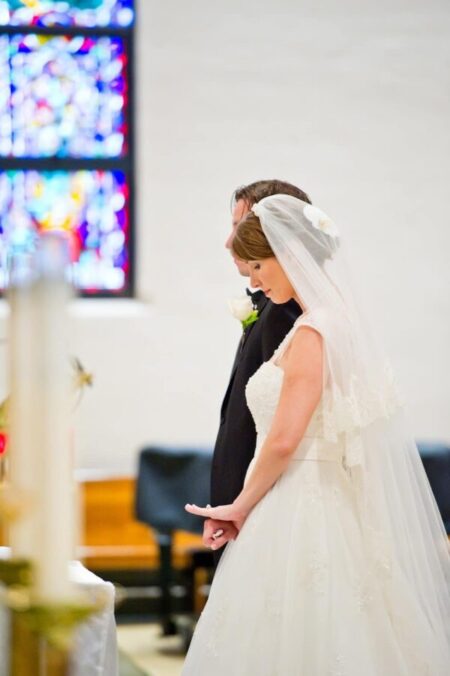
Over the decades Anne and I have been invited, occasionally, to the weddings of customers who became friends. We sit near the back. And when the officiant lifts the rings and blesses them — we reach for each other’s hand.
Something small and private happens in that moment. A recognition that the work done at a bench in Mandeville, Louisiana is somehow present at an altar. That hands that shaped and set and sized and polished are in some quiet way part of what is being offered.
We have never found the right words for it. We are not sure the right words exist.
But we have thought about why it moves us the way it does. And here is what we have come to understand.
A wedding is one of the most intentional human experiences there is. Every detail is chosen with care. The florist transforms the space — the fragrance, the color, the suggestion of a garden where something sacred is about to happen. The musicians open the heart and set the mood for what is to come. The photographer tries to stop time, to hold the unrepeatable moment in place. The caterer and the baker carry forward a tradition as old as the wedding at Cana — abundance, celebration, the table set for joy.
Each of these people does beautiful, necessary work. Each contributes something real to the day.
But of all of them — only the jeweler’s work goes to the altar.
And only the jeweler’s work stays.
The flowers are gone by Monday. The photographs live in a frame or a folder. The music faded the moment the last note ended. The cake was eaten, the candles burned down, the rented tuxedos returned.
But the ring — blessed at the altar, placed on the finger with vows the couple means with everything they have — that ring is still there. Every morning she wakes up and it is on her hand. Every ordinary Tuesday, every difficult season, every quiet moment of a life being built together. For the rest of her life.
This is why we believe the metal should be precious and the stones should be natural.
Not because someone told us so. Because we have sat in the back of enough churches, holding hands, to understand what that ring is actually carrying when it leaves our hands and goes to the altar.
A wedding reaches for something eternal. The ring is the only thing that remains in that reaching.
Why a lab diamond is a different conversation
We sell lab diamonds. We will help you find a beautiful one if that is what you choose and we will give you our honest counsel either way.
But we want you to understand what you are comparing.
A lab diamond is grown in a reactor in weeks. It is chemically identical to a natural stone and genuinely beautiful. Its price has fallen dramatically as production has scaled and will likely continue falling. There is nothing wrong with that.
A natural diamond is the opposite of a commodity. It is something the Earth made once — in a process that will never repeat, carried to the surface in a geological moment that ended millions of years ago. It is among the oldest things a human being will ever hold.
When you give one to someone you love, you are giving them something the universe spent three billion years making.
That is a different gift.
On the ring itself
The band matters as much as the stone.
Gold and platinum are precious because they are rare, because they endure, because they carry their own history in the earth. They were chosen for wedding bands across every civilization and every century not by accident but because they are worthy of the occasion.
An alternative metal ring, a silicone band, a ring ordered from a screen and delivered in a box — we are not here to judge any choice. But we are here to say clearly what we believe after forty years of placing rings on fingers and sitting in the back of churches watching what happens when those rings reach the altar.
The occasion deserves precious metal. The stone deserves to be natural. Not because of price. Because of meaning.
The Experience Your Story Deserves
No photograph does a natural diamond justice. The way it gathers light and returns it — the way it seems to carry something of the ancient darkness it came from and the ancient fire that delivered it — that is something that happens in person and nowhere else.
We created the Engagement Ring Experience for exactly this moment.
Not a sales appointment. Not a showroom visit where someone hands you a tray and waits. A private, unhurried experience designed for one couple at a time — where the story of your diamond begins before you ever choose a stone. Where you will hold natural diamonds in your hands, understand what you are looking at, and make a decision you will never second-guess.
The stone has been on its way to you for three billion years.
We think the experience of choosing it should be worthy of that.
Book the Engagement Ring Experience →
Anne Dale Jewelers — 829 Asbury Drive, Mandeville, Louisiana
(985) 626-4266 — Call or Text